Playable learning
Tiny worlds.
Big learning.
Nine browser games turn AI judgment and essential adult knowledge into
choices, consequences, and delightfully strange practice. The lessons
are real. The faculty includes one robot and one highly credentialed corgi.
Playable catalogue · 09 games · 02 worlds
01BLIPAI literacy, collaboration, and safe autonomy · 3 episodes
02The Barkley AcademyInsurance, food safety, scam spotting, and emergency preparedness · 6 games
Two complete learning worlds. Nine opportunities to make a mess safely.
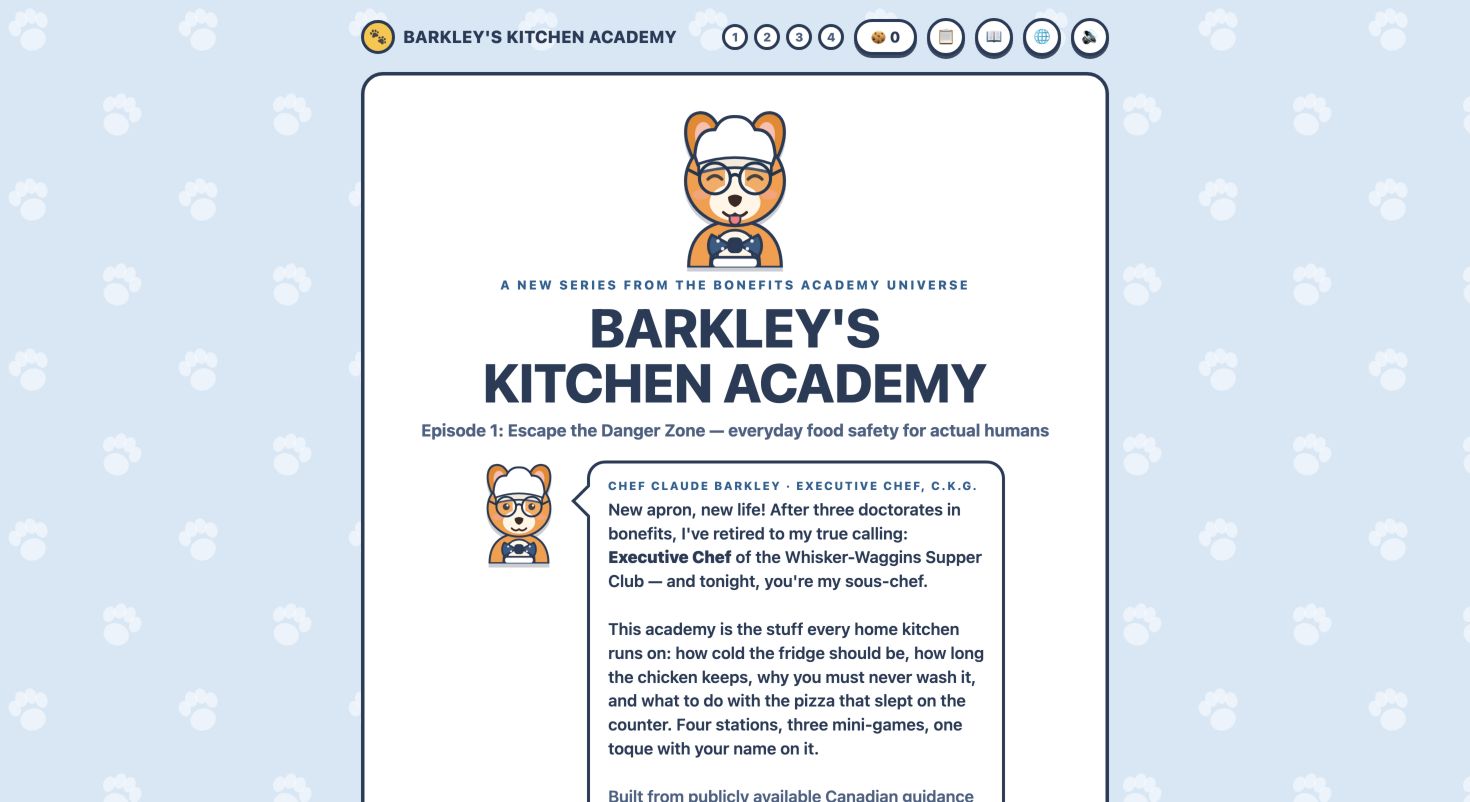
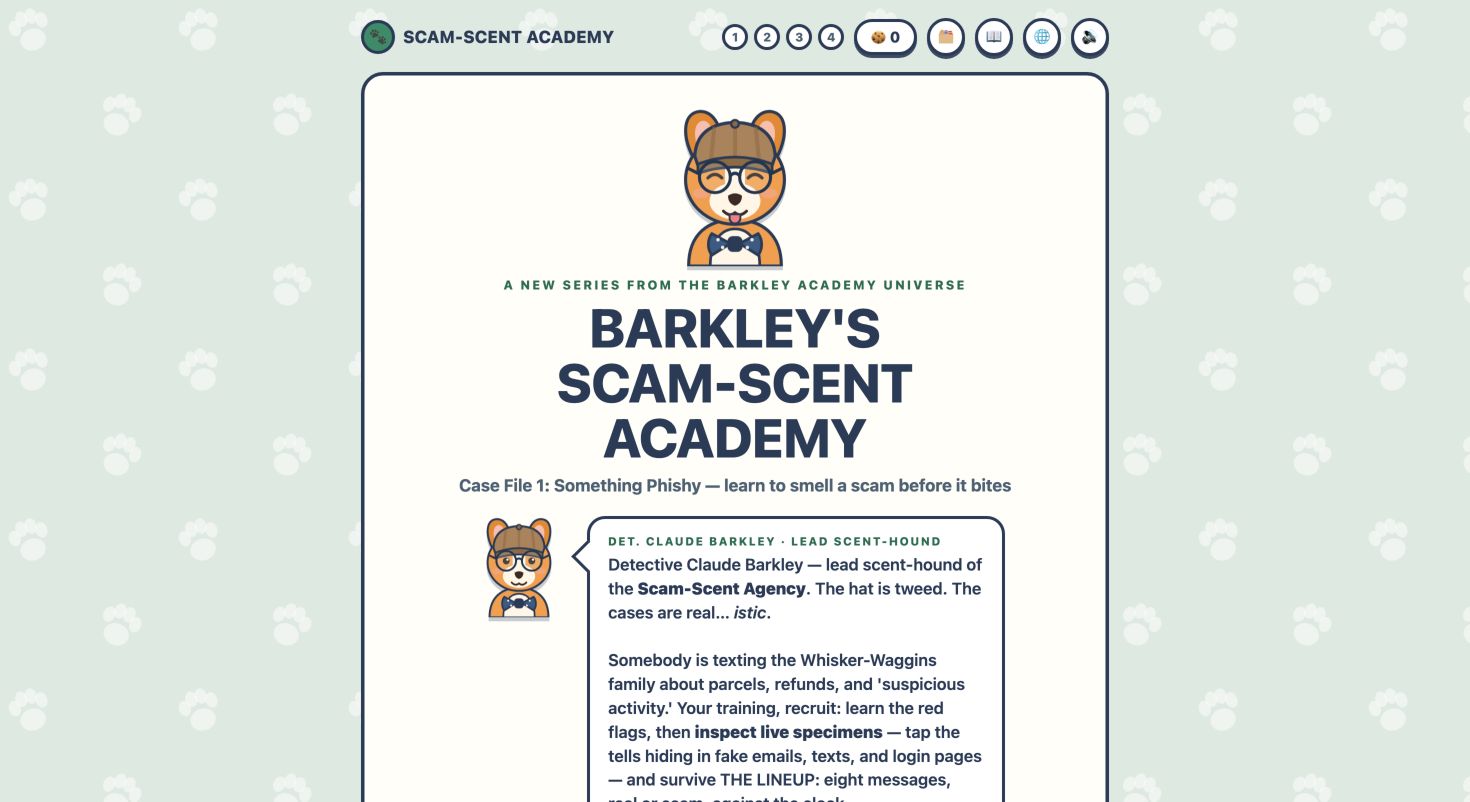
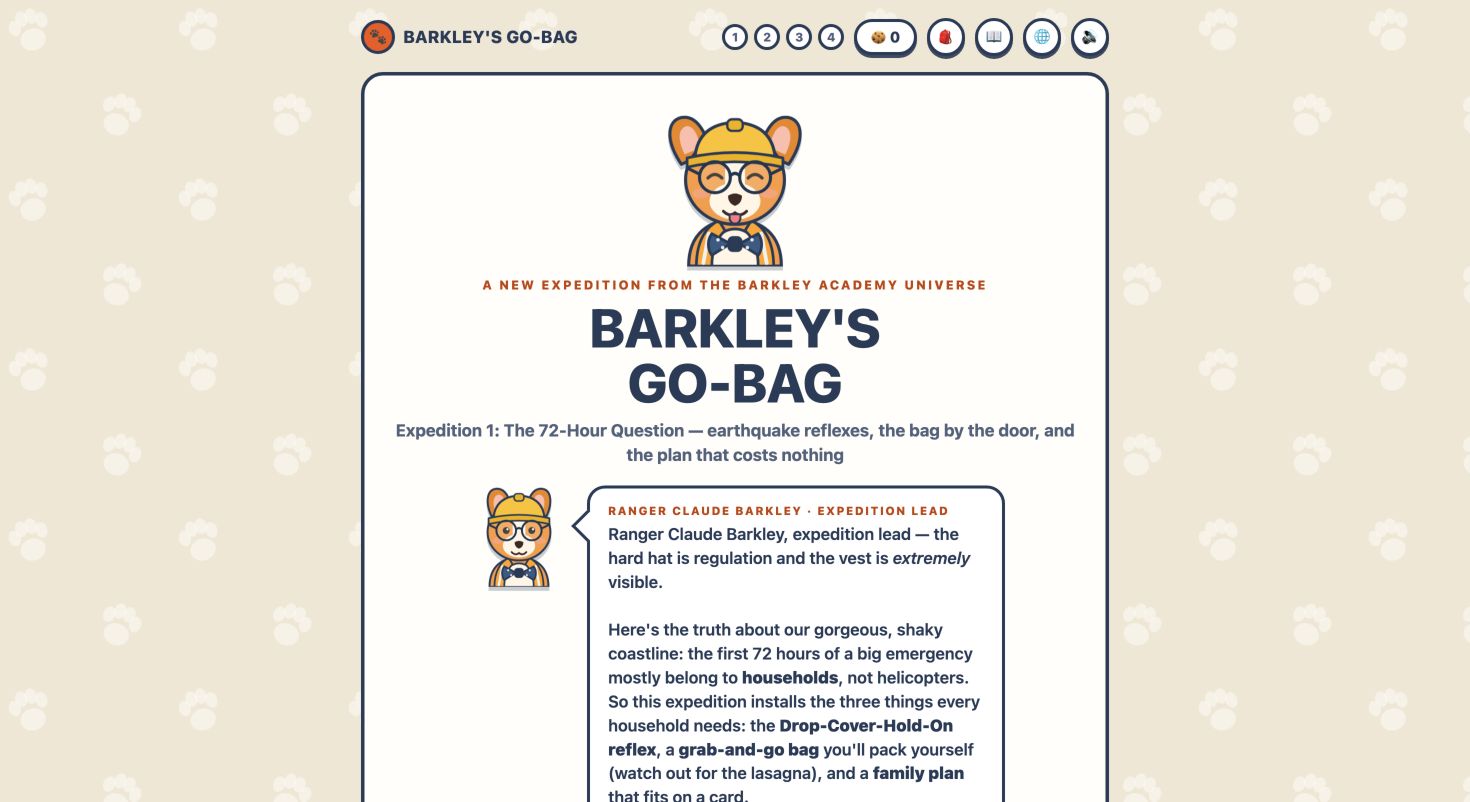
New on campus · 6 playable games
The Barkley Academy
Serious subjects. Unserious corgi.
One character, six subjects, and an escalating collection of professional
headwear. Learn insurance mechanics, food safety, scam spotting, and
emergency preparedness through ten-minute games built around choices,
visible consequences, and ridiculous diplomas.
The BLIP trilogy
Three playable episodes.
Each game uses choices, immediate feedback, and a little mechanical
chaos to turn abstract AI guidance into practiced judgment.
 Episode 01
Foundational AI literacy
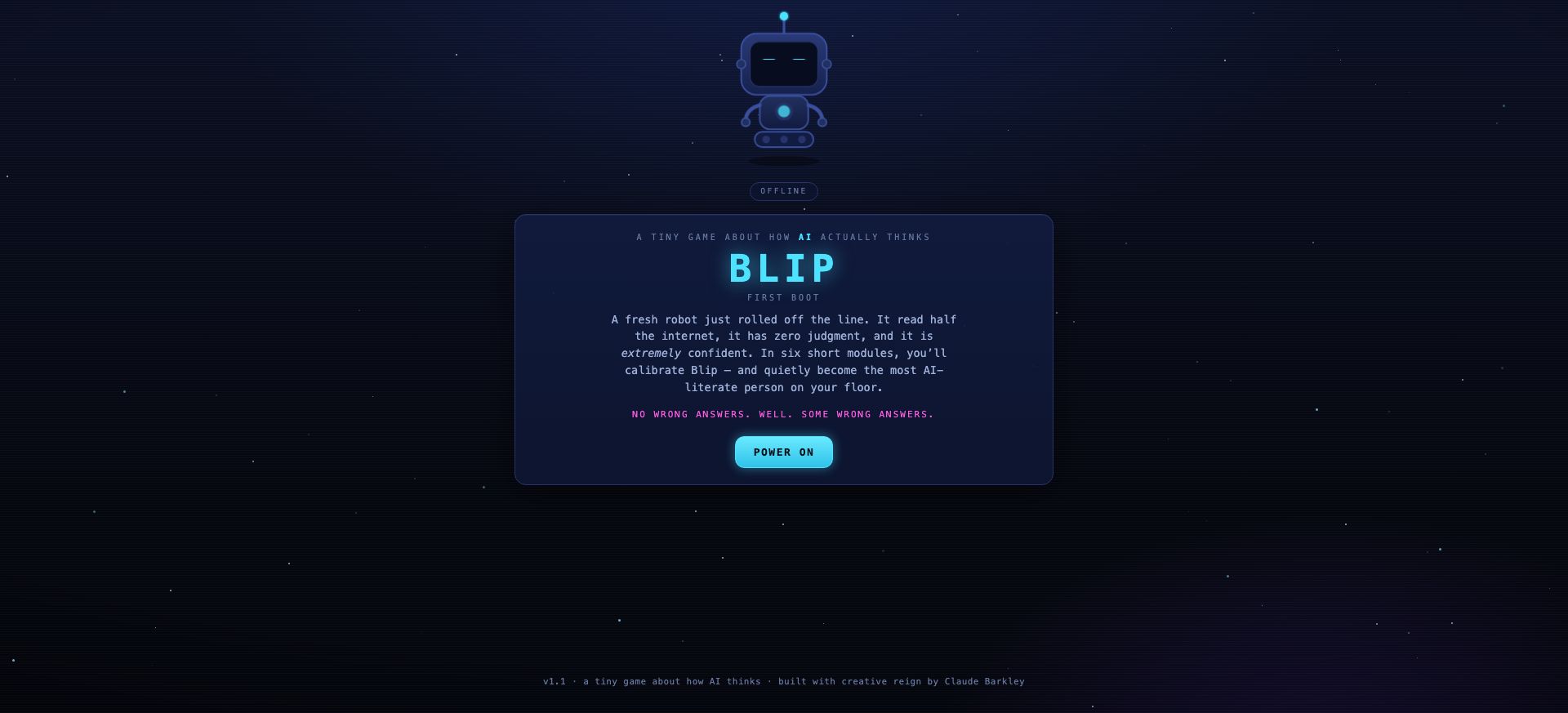
BLIP: First Boot
A fresh robot has read half the internet, has zero judgment, and is
extremely confident. Calibrate BLIP through six modules on prediction,
training data, hallucination, prompting, privacy, and verification.
Play First Boot
 Episode 02
Workplace collaboration
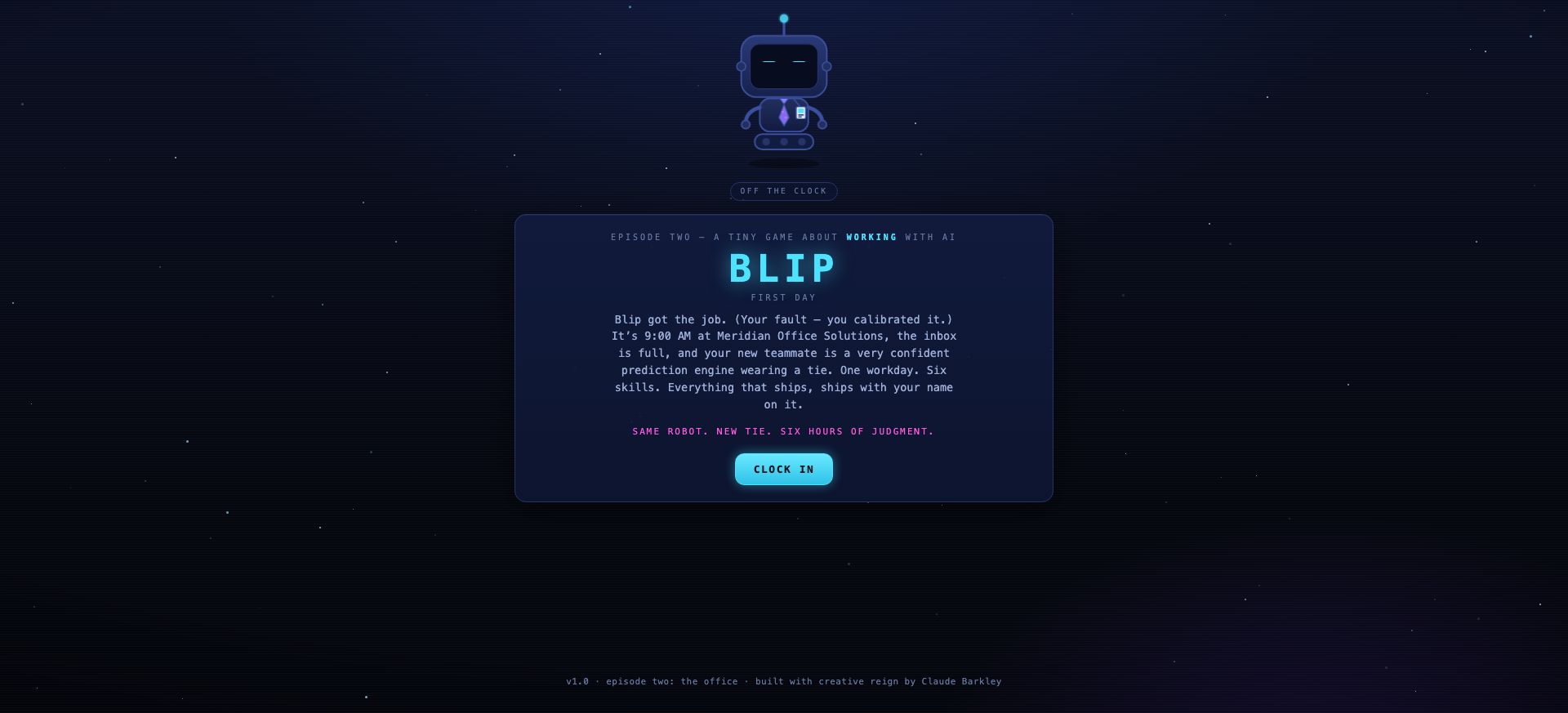
BLIP: First Day
BLIP has an ID badge, a tie, and access to the shared drive. Guide its
first office day through better handoffs, clearer briefs, evidence-led
review, useful feedback, and the final send check.
Play First Day
 Episode 03
Agentic AI and autonomy
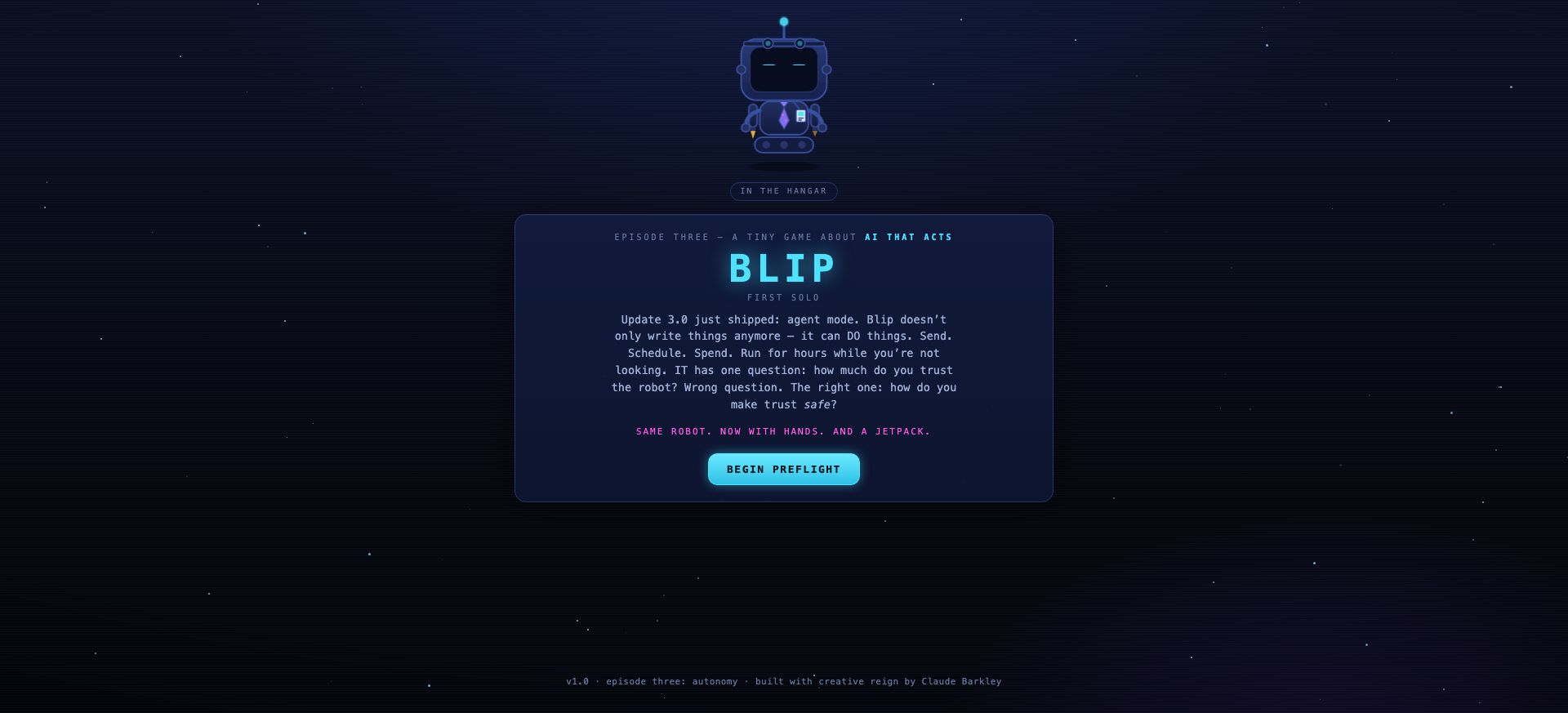
BLIP: First Solo
Decide where BLIP can fly solo, where it must pause, and where it keeps
its hands in its pockets. Configure permissions, checkpoints,
overnight work, prompt-injection defence, and a defensible trust dial.
Play First Solo
Why games?
Knowing the rule is not the same as making the call.
Scenario play makes learners choose under uncertainty, see consequences,
and revise their mental model. That is where guidance becomes usable
judgment, whether the subject is an AI handoff, an insurance claim, a
suspicious text, or the bag by the door.